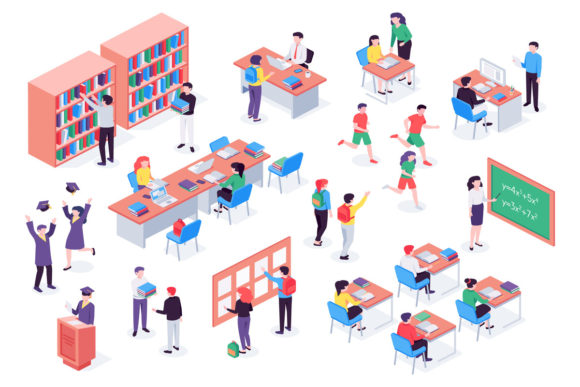
Isometric School: Bringing Classroom Concepts to Life with 3D Vector Icons
Visual communication has become the backbone of modern digital content, yet finding assets that balance professionalism with approachability remains a challenge for many creators. This is where the Isometric School illustration set steps in as a versatile solution. Designed with clean lines and a consistent three-dimensional perspective, this collection captures the essence of educational environments without the clutter of photorealistic photography. Whether you are designing a website for a local tutoring center, creating infographics for an ed-tech startup, or building presentation decks for teacher training workshops, these isolated vector icons offer a modular way to tell stories about learning.
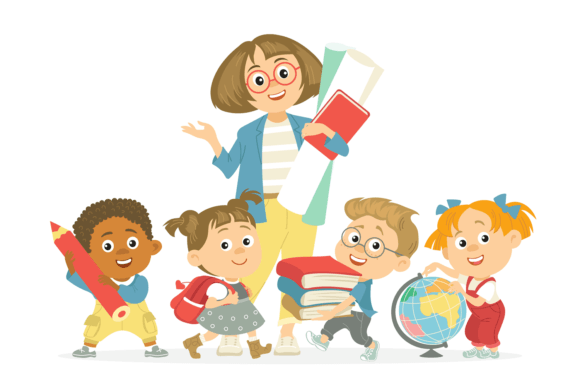
The core appeal of this asset pack lies in its specificity and flexibility. It features children and teachers interacting in various school settings, from the structured environment of a classroom to the collaborative atmosphere of a library. By focusing on isolated vector 3d illustration icons, the designer ensures that each element can stand alone or combine with others to create complex scenes. For professionals who need to customize their visuals, the inclusion of an EPS10 file means you are not stuck with static images. You have the freedom to edit, recolor, or rearrange components using software like Adobe Illustrator, ensuring the final output aligns perfectly with your brand identity.
Why Educators and Ed-Tech Marketers Choose Isometric Perspectives
The isometric style is more than just an aesthetic trend; it is a functional choice for explaining complex systems. In the context of education, where processes like curriculum development, student engagement, and administrative workflows can feel abstract, isometric illustrations provide a tangible framework. When you use Isometric School assets, you are leveraging a visual language that suggests order, structure, and clarity. This is particularly valuable for marketers and entrepreneurs in the education sector who need to convey trust and organization to potential clients or investors.
Consider a scenario where a school administrator is preparing a annual report for parents. Instead of relying on generic stock photos that may not reflect the diversity or specific activities of their institution, they can use these vector icons to build custom scenes. They might depict students in the school library engaging with digital resources, or teachers facilitating a group discussion. Because the elements are isolated, the administrator can swap out book colors to match the school’s branding or adjust the layout to fit the page dimensions. This level of customization helps bridge the gap between institutional messaging and personal connection.
Practical Applications for Content Creators and Bloggers
For bloggers and freelance writers covering topics related to parenting, child development, or educational technology, visual consistency is key to retaining reader attention. A blog post discussing the importance of social communication in math lessons can feel dry if accompanied by walls of text. By integrating icons from the Isometric School set, you can break up the content and illustrate key points visually. For instance, an icon showing pupils collaborating on a problem set reinforces the narrative about peer-to-peer learning without requiring a lengthy explanation.
The versatility of the file formats supports various digital platforms. The JPEG file at 72ppi is ready for immediate use in web articles, social media posts, or email newsletters. It loads quickly and looks crisp on screens, which is essential for maintaining user engagement. However, the real power lies in the EPS10 vector file. If you are creating a printable guide or a high-resolution eBook, you can scale these vectors to any size without losing quality. This dual-format approach saves time and resources, allowing creators to produce professional-grade content without needing to commission custom illustrations for every project.
Enhancing Presentations and Training Materials
Corporate trainers and educational consultants often struggle to make their slide decks engaging. Standard bullet points fail to capture the dynamic nature of learning environments. Using Isometric School icons, presenters can create visual metaphors that resonate with their audience. A slide about team-building in educational settings could feature an illustration of teachers and students interacting in a classroom, highlighting the human element of education. This visual cue helps the audience connect emotionally with the data being presented.
Moreover, the modular nature of the set allows for storytelling. You can sequence different icons to show a progression, such as a student entering the library, selecting books, and then studying with peers. This narrative flow is particularly effective in workshops where you are explaining pedagogical strategies or student journey maps. By removing the background and isolating the subjects, you ensure that the focus remains on the interaction and the activity, rather than distracting environmental details.
What to Consider Before Using Vector Icon Sets
While the Isometric School set offers significant advantages, it is important to approach its use with a strategic mindset. First, consider your technical capabilities. To fully leverage the EPS10 file, you need access to a vector editor like Adobe Illustrator. If you are not comfortable with vector software, you may find yourself limited to the pre-rendered JPEGs. While these are useful for quick projects, they lack the flexibility needed for deep customization. Assess whether you have the skills or resources to edit the vectors, or if the standard JPEGs will suffice for your immediate needs.
Second, think about consistency in your broader design system. Isometric illustrations work best when they are part of a cohesive visual strategy. If your website or marketing materials already use flat design or photographic imagery, introducing isometric icons might create a disjointed user experience. Ensure that the style of Isometric School complements your existing brand guidelines. You may need to adjust colors or line weights in the vector editor to achieve a seamless look.
Finally, consider the context of your audience. While isometric art is widely appreciated in tech and business circles, ensure it resonates with your specific demographic. For parents and educators, the clarity and warmth of the illustrations are usually well-received, but always test your visuals with a small segment of your audience to gauge their reaction. The goal is to enhance understanding and engagement, not to distract from the core message.
Maximizing Value Through Customization
The true value of this product file emerges when you treat it as a toolkit rather than a static image library. By removing or editing elements, you can create unique compositions that no one else has. For example, you might combine the classroom teacher icon with the library student icon to create a scene about after-school programs. This ability to mix and match allows for endless creativity, enabling you to tailor visuals to very specific niches within the education market.
Remember that the quality of the output depends on the care taken during editing. When working with the EPS10 file, pay attention to alignment and perspective. Since isometric illustrations rely on precise angles, even small adjustments can disrupt the visual harmony. Take the time to learn the basics of vector manipulation if you plan to do extensive editing. This investment in skill will pay dividends in the quality and uniqueness of your final designs.
In conclusion, Isometric School provides a robust resource for anyone looking to visualize educational concepts with clarity and style. From enhancing blog posts to professionalizing corporate presentations, these isolated vector icons offer the flexibility and quality needed in today’s digital landscape. By understanding how to effectively integrate and customize these assets, you can create compelling visual narratives that resonate with educators, parents, and students alike.