Building Emotional Intelligence: A Practical Guide to Module 4 - Empathy
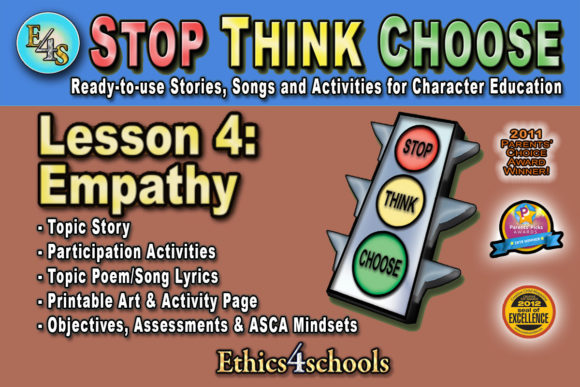
In the foundational years of childhood development, few skills are as critical yet challenging to teach as empathy. For parents, educators, and counselors working with children ages two to ten, the abstract concept of "feeling what others feel" can seem elusive. This is where structured character education becomes indispensable. Module 4 - Empathy from the Ethics4school Stop Think Choose Character Education Book offers a comprehensive, age-appropriate framework designed to transform this abstract ideal into tangible, daily behaviors. By integrating storytelling, music, interactive activities, and digital media, this module provides a roadmap for helping young learners recognize emotional states in themselves and others.
Understanding the Core Challenge of Early Emotional Development
Children between the ages of two and ten are navigating a complex social landscape. Toddlers are often egocentric by developmental necessity, while elementary-aged children begin to encounter more nuanced social dynamics, including exclusion, jealousy, and misunderstanding. The primary challenge adults face is not a lack of desire to teach kindness, but a lack of effective tools to make empathy concrete. Simply telling a child to "be nice" rarely yields lasting behavioral change.
The goal of Module 4 - Empathy is to bridge this gap. It moves beyond rote memorization of rules and instead focuses on emotional literacy. The module addresses the specific need for children to identify facial expressions, tone of voice, and body language as indicators of internal emotional states. By doing so, it equips children with the cognitive tools necessary to pause and consider the impact of their actions before they act—a core tenet of the "Stop Think Choose" methodology.
A Multi-Sensory Approach to Learning Empathy
One of the standout features of this module is its diverse instructional design. Recognizing that children learn in different ways, the curriculum employs a multi-sensory approach that keeps engagement high and retention strong.
The Power of Narrative and Song
The module begins with a compelling story that serves as an anchor for discussion. Narratives allow children to safely explore emotional scenarios without the pressure of personal involvement. Through the characters in the story, children observe the consequences of empathetic and non-empathetic choices. This is reinforced through full-sing and karaoke songs. Music is a powerful mnemonic device; lyrics about understanding feelings stick in a child’s mind long after a lecture fades. The karaoke element adds an interactive layer, encouraging participation and allowing children to embody the emotions expressed in the lyrics.
Art and Active Assessment
For kinesthetic and visual learners, the module includes art-based activities. Drawing or crafting representations of emotions helps externalize internal feelings, making them easier to discuss. Furthermore, the inclusion of assessment questions ensures that adults can gauge comprehension. These are not punitive tests but conversational prompts that help facilitators understand where a child might be struggling to connect actions with feelings.
Alignment with Professional Standards
For school counselors and educational administrators, the credibility of any character education program rests on its alignment with established professional standards. Module 4 - Empathy is explicitly designed to support the American School Counselor Association’s (ASCA) objectives. It utilizes the ASCA Mindsets and Behaviors Program Planning Tool to ensure that the content meets rigorous educational benchmarks.
This alignment is crucial for elementary school settings. It ensures that the lessons on understanding others' emotions are not merely supplementary but are integrated into the broader social-emotional learning (SEL) goals of the school. By mapping activities to specific ASCA standards, counselors can justify the time spent on these modules and track student progress in key areas such as self-awareness and social awareness.
Integrating Modern Media: Video Game Shows
In today’s digital-native environment, ignoring screen time is not a viable strategy. Instead, Module 4 - Empathy leverages it. The module includes two video game shows specifically curated to teach good empathic behavior. These interactive segments meet children where they are, using familiar gaming mechanics to reinforce ethical decision-making.
These video components are not passive viewing experiences. They require active participation, asking children to choose responses in simulated social scenarios. This immediate feedback loop helps children understand the direct correlation between their choices and the emotional outcomes for virtual characters, providing a safe space to practice empathy without real-world social risks.
Practical Implementation for Different Users
The versatility of Module 4 - Empathy allows it to be adapted for various environments, though the approach may differ slightly depending on the user.
- For Parents: The module serves as a weekend activity guide. Parents can use the story and songs during family time to open dialogues about feelings. The art activities provide a quiet, bonding opportunity to discuss emotions in a low-pressure setting.
- For Classroom Teachers: The structure fits seamlessly into morning meetings or social studies blocks. The assessment questions can be used to facilitate group discussions, helping students learn from each other’s perspectives.
- For School Counselors: The ASCA-aligned tools make this ideal for small group sessions. Counselors can use the video game shows to engage reluctant participants and the assessment data to identify students who may need additional support in emotional regulation.
Outcomes and Long-Term Benefits
Implementing Module 4 - Empathy yields measurable improvements in classroom climate and home dynamics. When children can accurately recognize the emotional states of others, incidents of conflict decrease. They become better equipped to negotiate, share, and collaborate. More importantly, they develop a stronger sense of self. Understanding others’ emotions is inextricably linked to understanding one’s own.
The "Stop Think Choose" framework embedded in the module encourages impulse control. Before reacting to a peer’s action, a child trained in this module is more likely to pause, interpret the peer’s intent, and choose a constructive response. This shift from reactive to reflective behavior is a cornerstone of emotional maturity.
Recommendations for Success
To maximize the effectiveness of this module, consistency is key. Empathy is not a skill acquired in a single lesson but a habit formed through repetition. Adults should model the behaviors taught in the module, verbalizing their own empathetic processes. For example, saying, "I see you are frustrated because your tower fell. I would feel sad too," reinforces the lessons from the story and songs.
Additionally, do not skip the assessment questions. They provide valuable insights into a child’s internal world. If a child struggles to answer why a character felt a certain way, it indicates a need for more focused practice on identifying facial cues or contextual clues. Use these moments as teaching opportunities rather than corrections.
In conclusion, Module 4 - Empathy from the Ethics4school Stop Think Choose Character Education Book is a vital resource for anyone dedicated to nurturing compassionate, emotionally intelligent children. By combining traditional pedagogical tools with modern media and professional standards, it offers a robust solution to the challenge of teaching empathy. Whether used at home or in school, it provides the practical steps needed to help children ages two to ten navigate their emotional worlds with confidence and care.