Pencil Logo Template Vector: Designing Smart Brand Identity
In the crowded landscape of modern branding, simplicity often cuts through the noise more effectively than complexity. A pencil logo template vector represents more than just a writing instrument; it is a universal symbol for creation, education, and the genesis of ideas. For designers, marketers, and entrepreneurs, leveraging this classic icon offers a unique opportunity to communicate clarity, precision, and creativity without relying on trendy aesthetics that may quickly fade. Whether you are building an identity for a tech startup, an educational platform, or a creative studio, the pencil remains a versatile and powerful visual anchor.
The Strategic Value of Minimalist Symbolism
When we think about brand identity, we often chase the "new." However, the pencil is timeless. It connects directly to the human act of drawing, writing, and planning. Using a pencil as your primary logotype element signals that your company values the foundational aspects of work: the initial sketch, the careful draft, and the thoughtful execution. This resonance is particularly strong for audiences who value authenticity and craftsmanship.
A vector-based approach ensures that this symbolism remains crisp across all mediums. From a tiny favicon on a web browser to a large-scale sign outside an office, the clean lines of a vector graphic maintain their integrity. This scalability is crucial for maintaining a consistent corporate image. Unlike raster images, which can pixelate when resized, a well-constructed vector file allows for infinite flexibility, making it an essential asset for any serious branding project.
Versatility Across Industries
One might assume that a pencil icon is limited to schools or stationery shops, but its application is far broader. The concept of "writing the future" or "drawing up plans" applies to numerous sectors. Here is how different industries can adapt this motif:
- Education and E-Learning: For tutors, online courses, or academic institutions, the pencil is a direct reference to study and student growth. It evokes a sense of traditional learning mixed with modern accessibility.
- Creative Agencies and Studios: Designers, writers, and illustrators can use the pencil to highlight their role as creators. It suggests that every project begins with a hand-drawn idea, emphasizing a personal touch in a digital world.
- Technology and Software: Tech companies focused on productivity tools, note-taking apps, or design software can use an abstract pencil shape to represent user input and creativity. It bridges the gap between analog inspiration and digital execution.
- Consulting and Strategy: Business consultants often "draft" strategies. A sleek, geometric pencil icon can symbolize precision, planning, and the structured approach to solving complex problems.
Design Approaches: From Literal to Abstract
Creating a memorable logo requires moving beyond the obvious. While a realistic illustration of a wooden pencil has its place, modern branding often benefits from abstraction. Consider how you can deconstruct the object into its basic shapes. The hexagonal body, the conical tip, and the eraser can be simplified into geometric forms that feel contemporary and clean.
Flat design is particularly effective here. By removing shadows, gradients, and excessive detail, you create a bold, easily recognizable mark. Think about negative space as well. Can the gap between two lines form the shape of a pencil? Can the tip of the pencil double as a cursor or a location pin? These clever integrations add a layer of intelligence to the design, rewarding viewers who look closer.
Color psychology also plays a vital role. Traditional yellow suggests optimism and affordability, while black or charcoal gray conveys sophistication and authority. A splash of vibrant color on the eraser or the tip can draw the eye and add a dynamic energy to an otherwise static object. The goal is to balance familiarity with novelty, ensuring the logo feels both comfortable and fresh.
Practical Tips for Implementation
Once you have selected or customized a pencil logo template, the next step is integration. Consistency is key to building brand recognition. Ensure that the logo appears correctly on all platforms, from social media avatars to business cards. Because pencils are linear objects, they work well in horizontal layouts, but you should also test a stacked version for square formats.
When working with web design, consider how the logo interacts with your navigation and content. A simple line-art style blends seamlessly with minimalist websites, allowing the content to take center stage. Avoid cluttering the background; let the isolated graphic breathe. White space enhances the perceived value of the design and makes it easier for the eye to process.
For print materials, such as brochures or letterheads, the pencil motif can be extended into patterns or watermarks. A faint sketch of pencil strokes in the background can add texture and depth without overwhelming the text. This subtle reinforcement of the brand theme creates a cohesive experience for the reader.
Keeping It Original in a Saturated Market
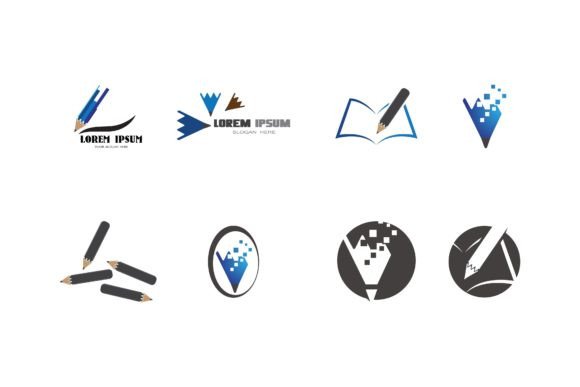
Because the pencil is a common object, there is a risk of your logo looking generic. To avoid this, focus on unique stylistic choices. Perhaps the pencil is broken, symbolizing hard work and intensity. Maybe it is transforming into a digital pixel, representing the merge of art and technology. Or perhaps it is held by an invisible hand, suggesting guidance and support.
Customization is essential. Do not rely solely on pre-made templates without modification. Adjust the proportions, tweak the angles, and experiment with typography. The font you pair with the icon should complement its style. A handwritten script might suit a creative writer, while a bold sans-serif works better for a corporate entity. The relationship between the icon and the text should feel balanced and intentional.
Ultimately, the success of your logo depends on how well it communicates your core values. A pencil is not just a tool; it is an extension of the mind. By choosing this symbol, you are inviting your audience into a process of creation and collaboration. Keep the design clean, the message clear, and the execution precise. In doing so, you create a brand identity that is not only visually appealing but also deeply meaningful.
Final Thoughts on Creative Direction
Design is never truly finished; it evolves with your business. Start with a strong foundation using a versatile pencil vector, but remain open to refinement. As your company grows, your visual identity may need to adapt, but the core concept of creation remains constant. Use this template as a starting point for a broader conversation about what your brand stands for. Whether you are a solo freelancer or a growing studio, let your logo be the first stroke in a masterpiece of brand storytelling.