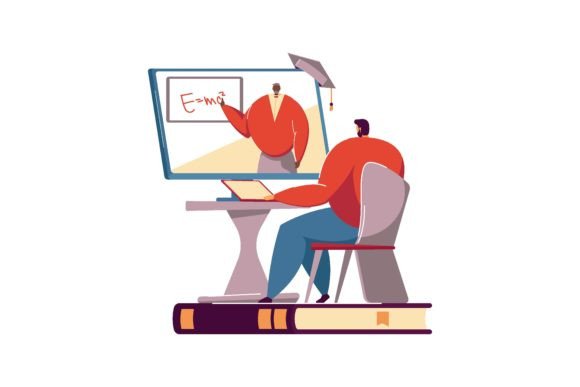
Student Learning Physics Online, Watching: A Strategic Approach to Remote Science Education
The landscape of higher education and professional development has shifted irrevocably. For adults balancing careers, family, and personal growth, the traditional classroom model often presents logistical barriers that are difficult to overcome. This is where student learning physics online, watching recorded lectures and participating in live webinars becomes not just a convenience, but a strategic advantage. It allows for a decoupling of time and place, enabling learners to engage with complex scientific concepts on their own terms.
However, treating online physics education as merely a passive consumption of video content is a mistake. To derive real value—whether for career pivoting, intellectual enrichment, or supporting a child’s education—one must approach student learning physics online, watching with intentionality. This article explores how to leverage distance courses effectively, turning digital seminars into tangible knowledge assets.
Redefining the Classroom: The Power of Asynchronous Mastery
Physics is a cumulative discipline. Each concept builds upon the last, from Newtonian mechanics to quantum theory. In a traditional lecture hall, if a student misses a critical derivation or fails to grasp a nuance in real-time, the gap can widen rapidly. Online learning flips this dynamic. When you are engaged in student learning physics online, watching a seminar, you control the pace. You can pause, rewind, and re-watch complex explanations until the logic clicks.
This autonomy supports deeper cognitive processing. For the adult learner, who often brings practical experience and critical thinking skills to the table, this flexibility is invaluable. It allows for the integration of new theoretical frameworks with existing mental models. Instead of rushing to take notes during a live presentation, you can focus on understanding the underlying principles, knowing you can review the material later for detailed annotation.
Strategic Benefits for Professional Development
Why would a marketer, entrepreneur, or project manager invest time in physics? The answer lies in first-principles thinking. Physics teaches rigorous problem-solving, data analysis, and logical deduction. By engaging in student learning physics online, watching expert instructors break down problems, you are not just learning about forces and energy; you are training your brain to deconstruct complex systems.
- Enhanced Analytical Skills: Understanding variable relationships in physics translates directly to analyzing market trends or operational efficiencies.
- Data Literacy: Physics courses heavily emphasize error analysis and statistical significance, crucial skills for any decision-maker relying on data.
- Creative Problem Solving: Seeing how physicists approach impossible-seeming constraints can inspire innovative solutions in business contexts.
Optimizing the Digital Learning Environment
To maximize the return on investment for your time, you must curate your learning environment. Distance education requires self-discipline, but it also rewards strategic planning. Simply logging in to watch a video is insufficient. You need a framework that supports retention and application.
First, treat the webinar or recorded lecture as a live event, even if it is asynchronous. Schedule specific blocks of time for student learning physics online, watching content. Eliminate distractions. Use noise-canceling headphones to immerse yourself in the teacher’s explanation. This signals to your brain that this is focused work, not casual browsing.
Second, adopt an active note-taking strategy. Do not transcribe what the instructor says. Instead, summarize concepts in your own words. Draw diagrams. Connect the current lesson to previous modules. This active engagement transforms passive viewing into active learning. If the platform allows, use timestamped notes to mark moments where you had questions or insights, making review sessions more efficient.
Selecting the Right Course and Instructor
Not all online physics courses are created equal. The quality of instruction varies significantly. When choosing a course, look beyond the syllabus. Evaluate the instructor’s communication style. Do they explain concepts clearly? Do they use visual aids effectively? Are they responsive to questions in forums?
Look for courses that emphasize conceptual understanding over rote memorization. A good instructor will explain why a formula works, not just how to use it. Check reviews from other adult learners. Did they find the pacing appropriate? Was the technical support reliable? These factors contribute significantly to the overall learning experience.
Navigating Common Pitfalls in Distance Education
While student learning physics online, watching offers flexibility, it also introduces specific risks. The most significant is isolation. Without the peer pressure and social interaction of a physical classroom, motivation can wane. To counter this, seek out communities. Join discussion forums associated with the course. Participate in study groups, even if they are virtual. Explaining concepts to others is one of the most effective ways to solidify your own understanding.
Another risk is superficial engagement. It is easy to fall into the trap of "video fatigue," where you watch hours of content without retaining much. To avoid this, set clear learning objectives for each session. Before starting a video, ask yourself: What specific concept do I want to master today? Afterward, test yourself. Can you explain the concept to a layperson? If not, revisit the material.
Furthermore, beware of technical dependencies. Ensure your internet connection is stable and your devices are charged. Have a backup plan, such as downloading lectures for offline viewing if possible. Technical glitches can disrupt flow and frustration can derail motivation.
Integrating Physics Knowledge into Daily Life
The ultimate goal of education is application. How can you apply the insights gained from student learning physics online, watching seminars to your daily life or work? Consider the concept of entropy. In physics, it measures disorder. In business, it can represent organizational chaos. Understanding how systems naturally tend toward disorder can help you design better processes to maintain order and efficiency.
Or consider momentum. In physics, it is mass times velocity. In project management, it represents the force of a team’s progress. Recognizing when a project has sufficient momentum to overcome resistance, or when it needs an external force to keep moving, is a valuable managerial insight.
By consciously looking for these parallels, you transform abstract scientific knowledge into practical wisdom. This interdisciplinary thinking is a hallmark of strategic leaders. It allows you to communicate complex ideas more effectively and make decisions based on fundamental truths rather than surface-level observations.
Long-Term Value and Continuous Learning
Education is not a one-time event but a continuous process. Completing a physics course is not the end; it is the beginning of a new way of seeing the world. Maintain your curiosity. Follow up on topics that intrigued you. Read related articles. Watch additional videos. Engage with the scientific community online.
Moreover, consider sharing your journey. Write blog posts about what you are learning. Discuss insights with colleagues. Teaching others reinforces your own knowledge and positions you as a thoughtful, intellectually curious professional. This can enhance your personal brand and open up new networking opportunities.
Making the Decision to Start
If you are considering embarking on this journey, start small. Do not commit to a year-long degree program immediately. Try a short module or a single webinar. Test your interest and your ability to manage the workload. Assess whether the format suits your learning style. If it does, gradually increase your commitment.
Remember, the goal is not to become a physicist overnight. The goal is to expand your intellectual toolkit. Student learning physics online, watching expert instructors navigate the complexities of the universe provides a unique lens through which to view your own challenges. It fosters resilience, precision, and clarity.
In a world filled with noise and uncertainty, the clarity of physical laws offers a grounding perspective. By strategically engaging with online physics education, you are not just learning science; you are cultivating a mindset capable of tackling any complex problem with confidence and rigor. Take the first step. Find a course that resonates with you. Press play. And begin the process of transforming information into insight.