Understanding the Online Teacher Explaining Graphs on Monitor Concept
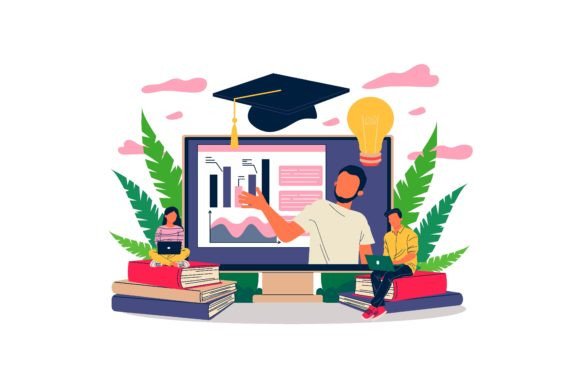
The visual of an online teacher explaining graphs on monitor has become a defining symbol of modern digital education. This vector illustration, often depicting students with laptops and books watching a webinar, represents more than just a aesthetic choice for educational websites. It encapsulates the core mechanics of eLearning, remote training, and internet-based instruction. For educators, instructional designers, and institutions evaluating digital tools, understanding the implications behind this imagery is crucial for making informed decisions about their online teaching strategies.
When we discuss the concept of an online teacher explaining graphs on a monitor, we are referring to the synchronous or asynchronous delivery of complex data visualization through digital screens. This method relies heavily on the clarity of the interface, the quality of the transmission, and the engagement level of the remote audience. The image serves as a metaphor for the bridge between traditional pedagogy and modern technology, highlighting both the opportunities and the challenges inherent in virtual classrooms.
Why This Visual Concept Matters in E-Learning
People researching online education solutions often look for representations that convey clarity and connection. The specific scenario of a teacher analyzing graphs is significant because it moves beyond simple lecturing. It implies critical thinking, data interpretation, and interactive learning. When students see this representation, they anticipate a structured, analytical approach to learning rather than passive content consumption.
There are several reasons why stakeholders in education focus on this model:
- Clarity of Communication: Graphs and charts require precise explanation. The monitor acts as a shared whiteboard, ensuring all participants view the same data simultaneously.
- Accessibility: Digital platforms allow students to access recorded sessions, enabling them to review complex graphical explanations at their own pace.
- Scalability: One teacher can explain concepts to hundreds of students via webinar, a feat difficult to achieve in physical classrooms without compromising visibility.
Benefits of the Digital Webinar Model
Adopting a structure where an instructor leads a session via screen sharing offers distinct advantages. First, it standardizes the learning experience. Every student sees the exact same graph, annotation, and highlight, reducing the ambiguity that can occur when students sit at different angles in a physical lecture hall. This consistency is vital for subjects like statistics, economics, or science, where precise data interpretation is key.
Furthermore, the integration of laptops and digital books allows for immediate application. As the teacher explains a trend in a graph, students can simultaneously open their own datasets or reference materials. This multi-tasking capability fosters a deeper level of engagement, transforming the webinar from a passive broadcast into an active workshop. The vector illustration often used to depict this scene underscores the seamless integration of hardware and software in the learning process.
Tradeoffs and Considerations
While the benefits are clear, there are notable tradeoffs. The primary challenge is the lack of non-verbal cues. In a physical classroom, a teacher can read the room, noticing confused looks or disengagement. On a monitor, especially if cameras are off, the instructor may be explaining graphs to a void, unsure if the material is landing effectively. This requires a shift in teaching style, demanding more frequent check-ins, polls, and interactive elements to gauge understanding.
Technical reliability is another critical factor. The quality of the "monitor" experience depends entirely on bandwidth, platform stability, and device compatibility. A pixelated graph or audio lag can disrupt the flow of logic, causing students to miss key insights. Therefore, institutions must invest not just in content creation, but in robust technical infrastructure and support.
Additionally, screen fatigue is a real concern. Staring at a monitor for extended periods during intense analytical sessions can lead to cognitive overload. Educators must balance dense graphical explanations with breaks, discussions, and varied media formats to maintain student attention and well-being.
When This Approach Is a Strong Fit
The model of an online teacher explaining graphs via webinar is particularly effective in specific scenarios. It is ideal for corporate training programs where employees need to understand performance metrics, financial reports, or market trends. In these contexts, the ability to share real-time data and annotate it live provides immediate value and relevance.
It is also highly suitable for higher education courses that rely heavily on data analysis. Subjects such as epidemiology, data science, and macroeconomics benefit from the precision of digital screen sharing. Students can zoom in on details, download the source files, and replicate the analysis on their own laptops, creating a hands-on learning environment even in a remote setting.
When Alternatives May Be Worth Considering
However, this approach may not be the best fit for every educational goal. For subjects that rely heavily on kinesthetic learning, physical collaboration, or emotional intelligence, such as nursing clinicals, theater arts, or early childhood education, a webinar format focusing on graphs may feel disconnected and insufficient. In these cases, hybrid models or fully in-person instruction might yield better outcomes.
Moreover, if the target audience lacks reliable internet access or appropriate devices, the digital divide becomes a significant barrier. Relying solely on high-bandwidth webinars can exclude vulnerable populations. In such situations, asynchronous methods like downloadable PDFs, low-data video tutorials, or printed materials may be more equitable and effective.
Practical Decision-Making Insights
For those evaluating whether to implement this type of online instruction, consider the following steps:
- Assess Content Complexity: Determine if your subject matter relies on visual data. If yes, digital screen sharing is a strong tool. If no, consider if a webinar is the most engaging format.
- Evaluate Audience Readiness: Survey your students or employees regarding their technical setup and comfort level with live digital interactions.
- Plan for Interaction: Do not rely solely on the teacher's explanation. Build in moments for questions, breakout rooms, and collaborative problem-solving to mitigate the isolation of remote learning.
- Invest in Quality: Ensure that the graphics used are high-resolution and legible on small screens. Poor visual design can undermine even the best pedagogical efforts.
In conclusion, the image of an online teacher explaining graphs on monitor is more than a stock illustration; it is a representation of a powerful educational modality. By understanding its strengths, limitations, and ideal use cases, educators and organizations can make informed decisions that enhance learning outcomes. Whether you are designing a corporate training module or a university course, aligning your delivery method with your audience's needs and the nature of your content is essential for success in the digital age.