Mastering the Calculator Vector Icon Template
In the visual language of the digital age, few symbols are as universally recognized as the calculator. It represents precision, logic, and the tangible act of solving problems. For designers, marketers, and content creators, leveraging a high-quality Calculator Vector Icon Template is not merely about inserting a generic image; it is about communicating trust, efficiency, and clarity. Whether you are building a fintech app, designing an educational resource, or crafting a corporate presentation for accounting firms, the right icon serves as a visual anchor that guides the user’s understanding.
The power of this asset lies in its versatility. A well-crafted vector illustration allows for infinite scalability without loss of quality, ensuring your graphic elements look crisp on a massive billboard or a tiny smartphone screen. By utilizing a flexible template, you can adapt the core concept to fit various brand identities, moving beyond the standard black-and-white aesthetic into vibrant, modern interpretations that resonate with today’s diverse audiences.
Bridging Functionality and Aesthetic Appeal
At its core, a calculator is a tool for calculation, but in design, it is a symbol of empowerment. When you integrate a calculator icon into your web or print materials, you are signaling to the audience that complex data has been simplified. This is crucial in sectors like finance, economy, and business, where users often feel overwhelmed by numbers. A clean, flat design approach helps reduce cognitive load, making the interface feel approachable rather than intimidating.
Consider the structural elements of a typical calculator icon. It usually features a rectangular body, a display screen, and a grid of buttons representing a keyboard. In a vector template, these components are separate layers. This separation is vital for customization. You might choose to highlight specific buttons to suggest functionality, such as a prominent "equals" sign for a results-driven marketing campaign, or mute the colors of the keys to let the display area stand out for data visualization purposes. This level of control transforms a simple object into a dynamic communication tool.
Tailoring Design for Specific Industries
Different sectors require different visual tones. A one-size-fits-all approach rarely works in professional design. Here is how you can adapt a calculator vector template to suit specific contexts:
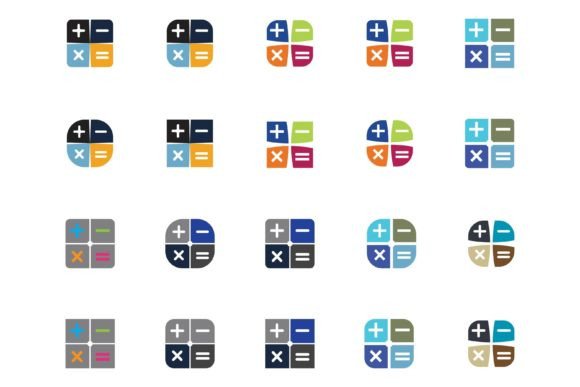
- Education and School: For math textbooks or e-learning platforms, use bright, primary colors and rounded edges. The goal is to make mathematics feel friendly and accessible. A simple, cartoon-style vector can engage younger students, while a more structured, grid-based layout suits higher education materials focused on statistics or engineering.
- Corporate Finance and Accounting: In this realm, professionalism is paramount. Opt for a minimalist, line-art style or a monochrome palette using shades of black, gray, and navy. The icon should convey stability and precision. Avoid overly decorative elements; instead, focus on geometric perfection and balanced spacing to reflect the accuracy expected in financial reporting.
- Tech and Apps: Modern software interfaces demand sleek, modern aesthetics. Consider using negative space creatively within the vector shape. A dark mode-compatible icon with subtle gradients or neon accents can signal innovation and technology. This approach works well for budgeting apps, crypto trackers, or scientific calculators available on the internet.
Creative Variations and Symbolic Depth
While the traditional rectangular shape is iconic, creative professionals can push boundaries by exploring abstract interpretations. The calculator does not always need to look like a physical device. You can deconstruct the element into its basic shapes—circles for buttons, rectangles for the screen—and rearrange them into a logo or brand mark. This abstract approach can make your brand feel more unique and less reliant on stock imagery clichés.
Another effective strategy is combining the calculator with other symbols to tell a richer story. For instance, merging a calculator with a leaf motif can represent eco-friendly budgeting or sustainable economics. Pairing it with a globe can signify international trade or currency exchange. These combinations create a new sign that communicates multiple layers of meaning instantly. When used in media campaigns, these composite icons can serve as powerful visual shorthand for complex concepts.
Furthermore, consider the emotional impact of color. While white backgrounds offer a clean canvas, introducing color psychology can enhance user engagement. Green often associates with growth and money, making it ideal for investment platforms. Blue suggests trust and security, perfect for banking interfaces. Red might indicate debt or urgent calculations. By manipulating the color palette of your vector template, you align the visual cue with the emotional response you wish to evoke in your audience.
Practical Implementation for Web and Print
Implementing these icons effectively requires attention to technical details. Since you are working with vectors, ensure that your final export settings match the intended medium. For website use, SVG formats are preferred because they remain sharp at any resolution and have small file sizes, contributing to faster load times. For print materials like brochures or business cards, EPS or PDF formats ensure high-resolution output without pixelation.
Consistency is key when using icons across a platform. If you choose a flat style for your calculator icon, ensure all other icons in your set share the same stroke width, corner radius, and visual weight. This creates a cohesive creative system that feels professional and polished. Inconsistent iconography can distract users and diminish the perceived quality of your product or service.
Additionally, think about accessibility. Ensure there is sufficient contrast between the icon and its background. If the calculator icon is part of an interactive button, make sure it is large enough to be tapped easily on touchscreens. Adding alt text that describes the function, such as "Open loan calculator," ensures that users with visual impairments can still navigate your digital space effectively.
Elevating Your Visual Strategy
Ultimately, a Calculator Vector Icon Template is more than just a clipart asset; it is a foundational building block for visual storytelling. By understanding the nuances of shape, color, and context, you can transform a standard symbol into a compelling narrative element. Whether you are illustrating a blog post about personal savings, designing a dashboard for a startup, or creating educational materials for a school, the right icon enhances comprehension and engagement.
Remember to keep your design intent clear. Ask yourself what message the calculator conveys in your specific project. Is it about speed? Accuracy? Simplicity? Let that answer guide your customization choices. By treating each icon as a deliberate design decision rather than an afterthought, you elevate the overall quality of your work. Embrace the flexibility of vector graphics to experiment, iterate, and refine until the visual perfectly matches your conceptual goals. In a world saturated with information, clear and thoughtful design remains the most effective way to connect with your audience.